In the ever-evolving landscape of software architecture, the debate surrounding microservices and monolithic architecture has raged on for years. Back in 2015, I remember discussing with a software architect about Kubernetes. He was understandably very interested in migrating applications to a microservices based architecture and adopting Kubernetes. One of his most important selling points was the costs. However, as time has shown, the reality of microservices architecture isn’t always as cost-effective as it might seem at first glance.
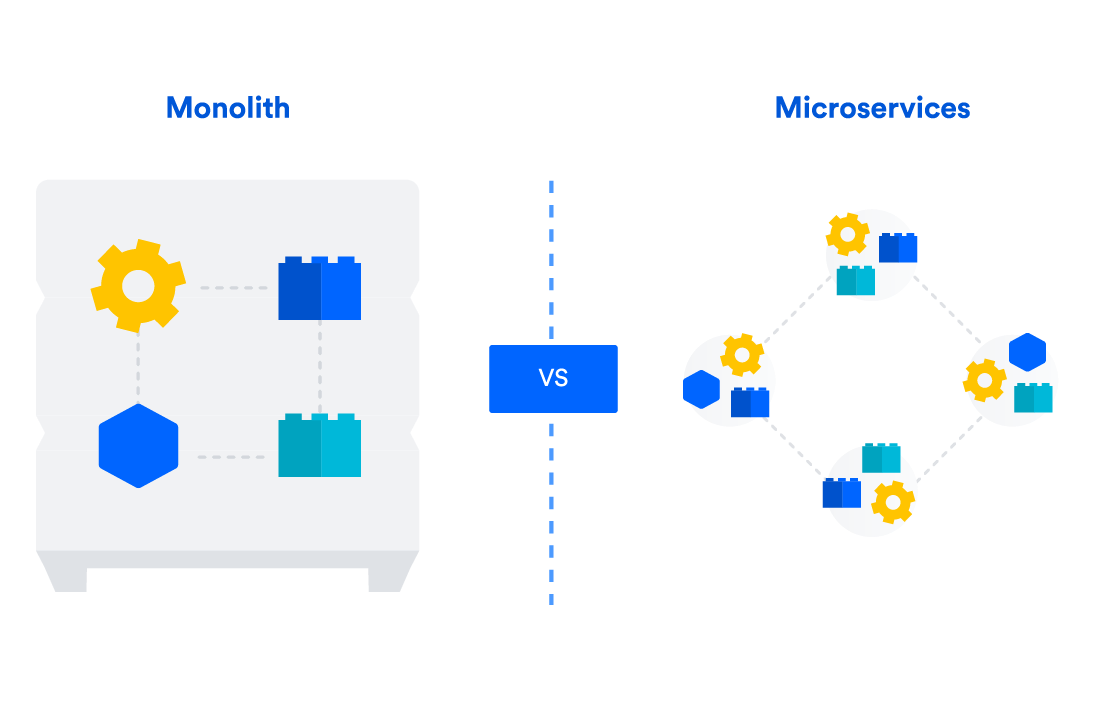
Microservices architecture has been touted for its ability to enhance flexibility and increase productivity and efficiency. Yet, the hidden costs associated with this approach have become apparent over time. Let’s dissect some of the key financial aspects.
Data Transfer Costs: In a microservices environment, communication between different services is frequent and essential. However, this constant communication leads to data transfer costs, which can significantly impact your budget. While techniques like Topology Aware Hints (TAH) can help mitigate these costs to some extent, they remain a noteworthy expenditure.
Operational Overhead: Microservices require the use of sidecars, service meshes, and a host of tools for operational and management purposes. These components are often more complex and resource-intensive than their counterparts used in monolithic applications, contributing to increased operational costs.
So, Does it mean microservices architecture is more expensive? or as David Heinemeier Hansson (Creator of Ruby on Rails) says microservices don’t make sense?
Well, in my opinion it depends (I know the cliche!). If we compare microservices architecture to a well-designed monolithic architecture, its direct costs are in general higher; However, the benefits of microservices, such as flexibility and increased productivity, often lead to lower indirect costs associated with management and operations.
Consider the Example of AWS Prime Video: By transitioning away from microservices to a monolithic architecture, AWS reportedly achieved a 90% cost reduction. This demonstrates that simplicity can be a compelling factor in favor of monolithic architecture in certain scenarios.
Nevertheless, it’s important to note that many applications thrive in Kubernetes or other orchestrators, with stakeholders satisfied with their choice. The CNCF (Cloud Native Computing Foundation) community acknowledges the cost challenges and actively works on mitigating them through initiatives like TAH (Topology Aware Hints) and Karpenter.
In conclusion, the debate over whether microservices architecture is more expensive than monolithic architecture isn’t easily settled. Both approaches have their merits and drawbacks, and the cost-effectiveness of each depends on the specific use case and how well they are implemented.
As technology evolves, we can expect ongoing discussions about the financial aspects of software architecture. With initiatives like TAH and Karpenter, the CNCF community is actively addressing the cost challenges associated with microservices. Therefore, the future promises further exploration and innovation in the quest for cost-effective software solutions. Stay tuned for more developments in the years to come.
 Net Tweets